Snakes of Adelaide & the Adelaide Hills
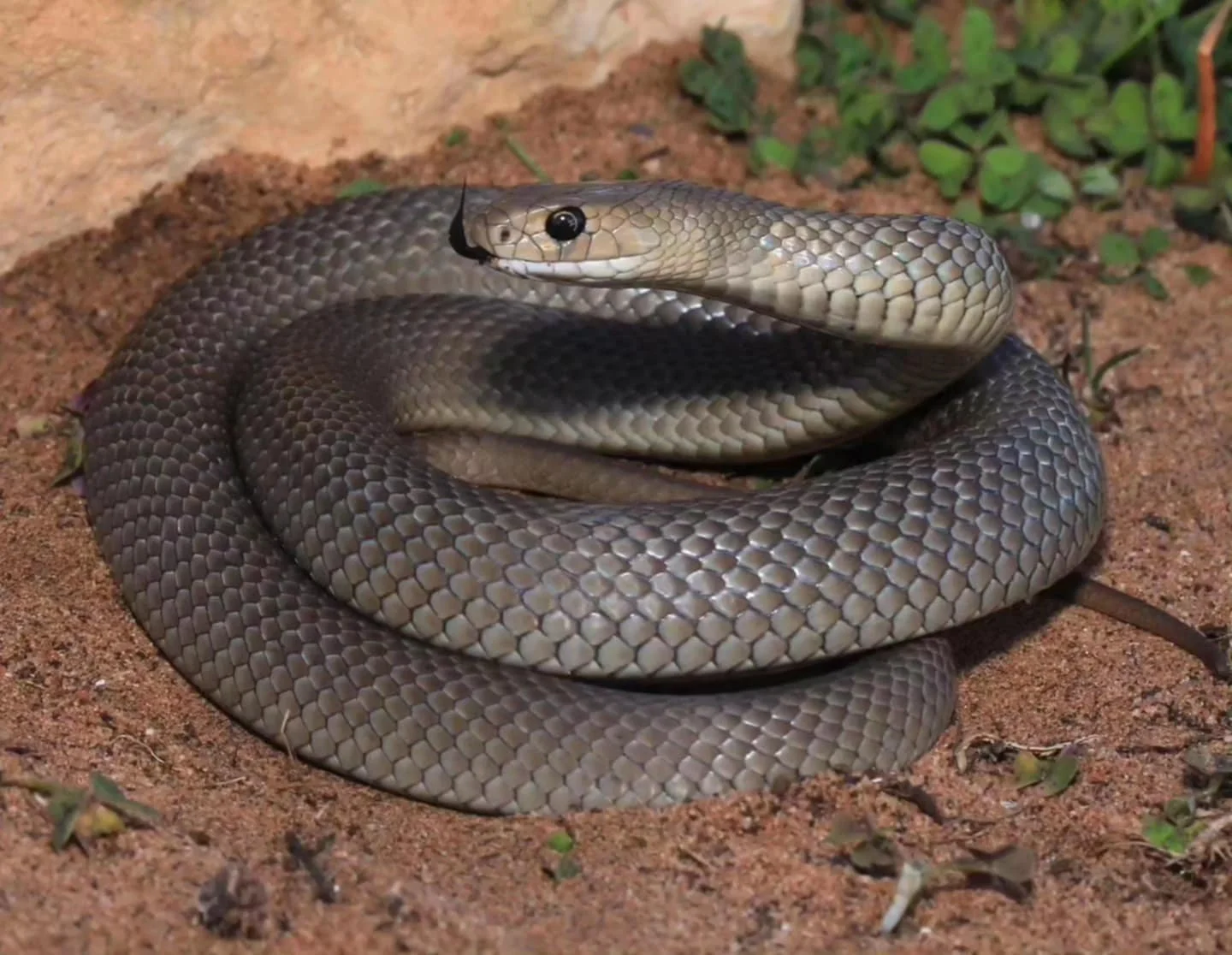
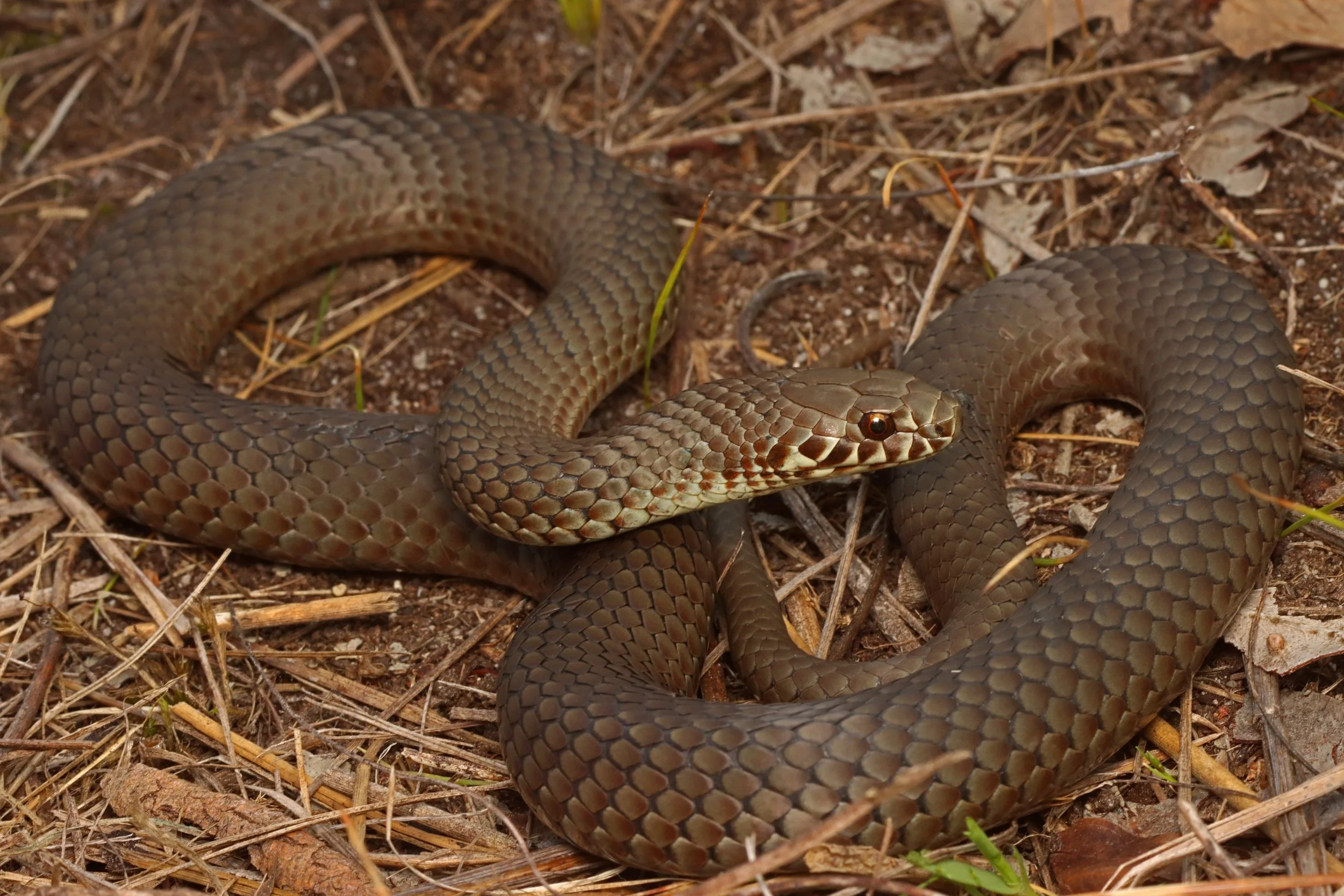
Eastern Brown Snake (Pseudonaja textilis)
DANGEROUS. Eastern Browns are the most common snake species in the Greater Adelaide region. Brown snakes (there are several species around Australia) are venomous and responsible for most bite fatalities in this country. They can grow up to around two metres long but are typically up to half that size around Adelaide.
The scientific genus for the brown snakes, ‘Pseudonaja’, translates to ‘False Cobra’, in relation to it’s familiar threat posturing of flattering out its neck and rearing up.
Despite the name ‘brown snake’ it can be several other colours such as shades of brown, orange, completely black, and banded. Juvenile brown snakes generally have a dark head with a black band behind the neck.
Photo credit: Harry Jones.
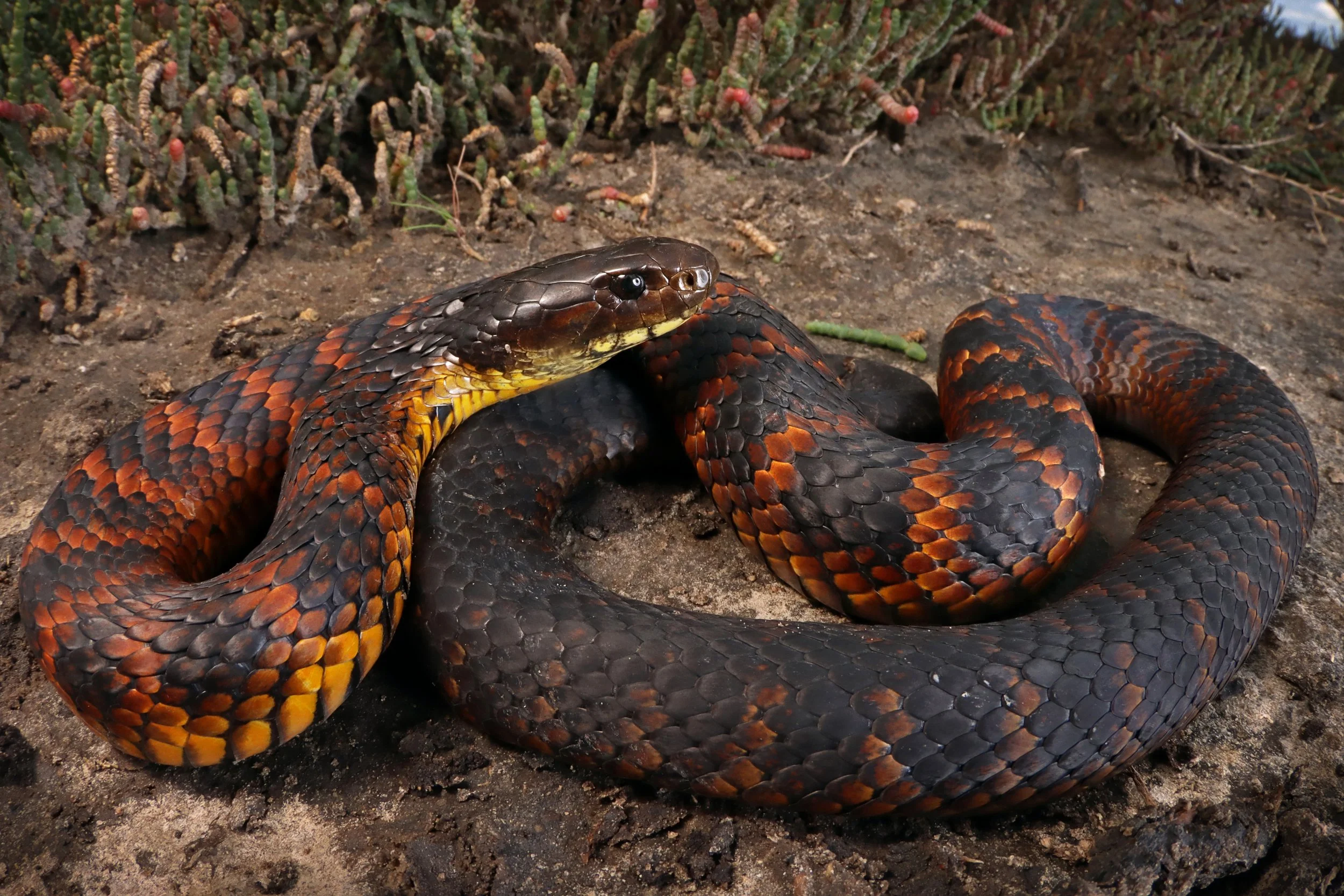
Photo credit: Connor Margetts.
Tiger Snake (Notechis scutatus)
DANGEROUS. These striking venomous snakes are considered vulnerable in the region with historic sightings occurring around Woodside, Verdun and Balhannah.
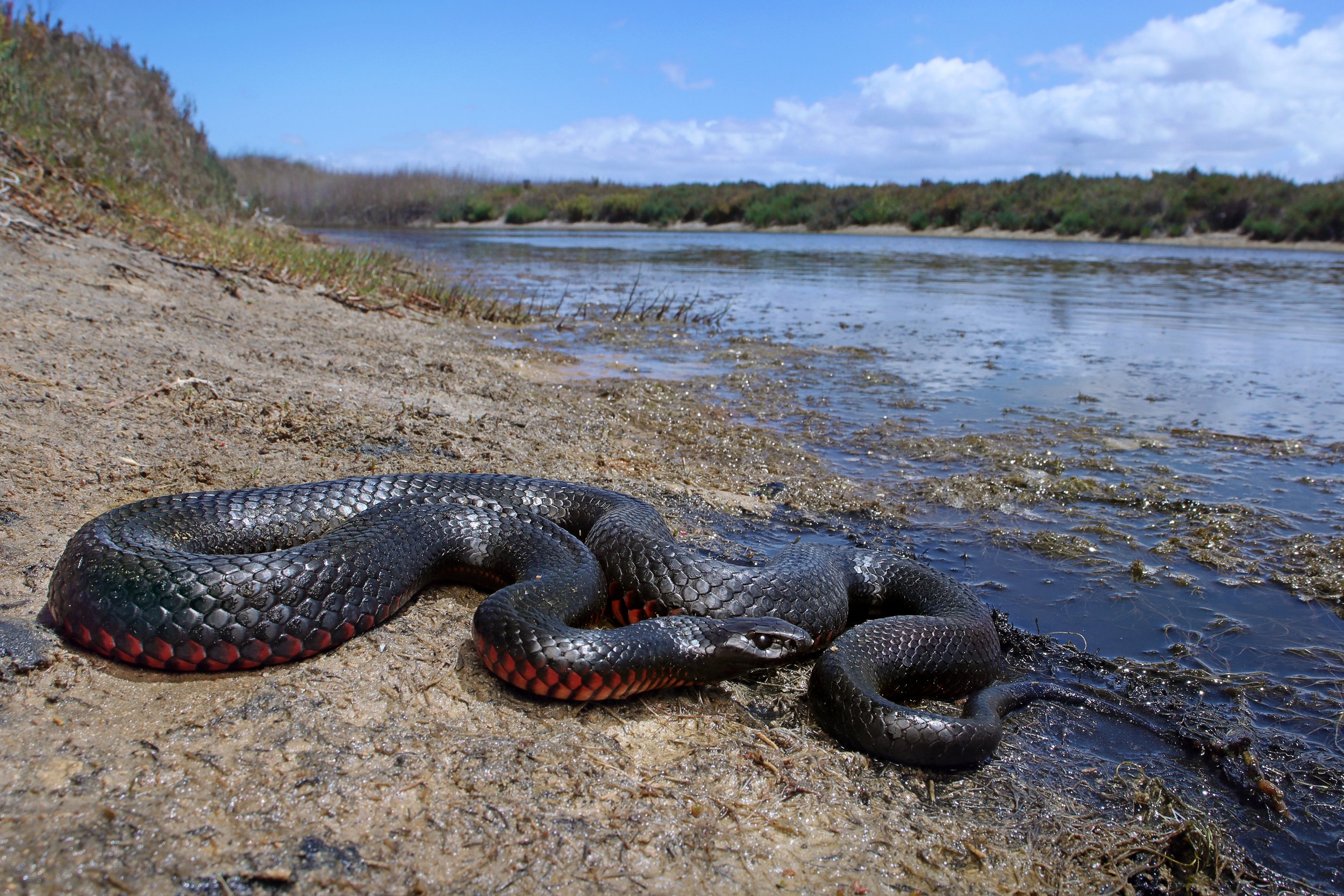
Red-bellied Black Snake
(Pseudechis porphyriacus)
DANGEROUS. These beautiful venomous snakes are glossy black, typically with bright red or orange underparts. They can grow to around 1.8m and lack a well defined neck.
They are commonly found along watercourses and wetlands but also in woodlands and grasslands. They feed on fish, tadpoles, frogs, snakes, birds and small mammals. They will even eat members of their own species.
Photo credit: Connor Margetts.
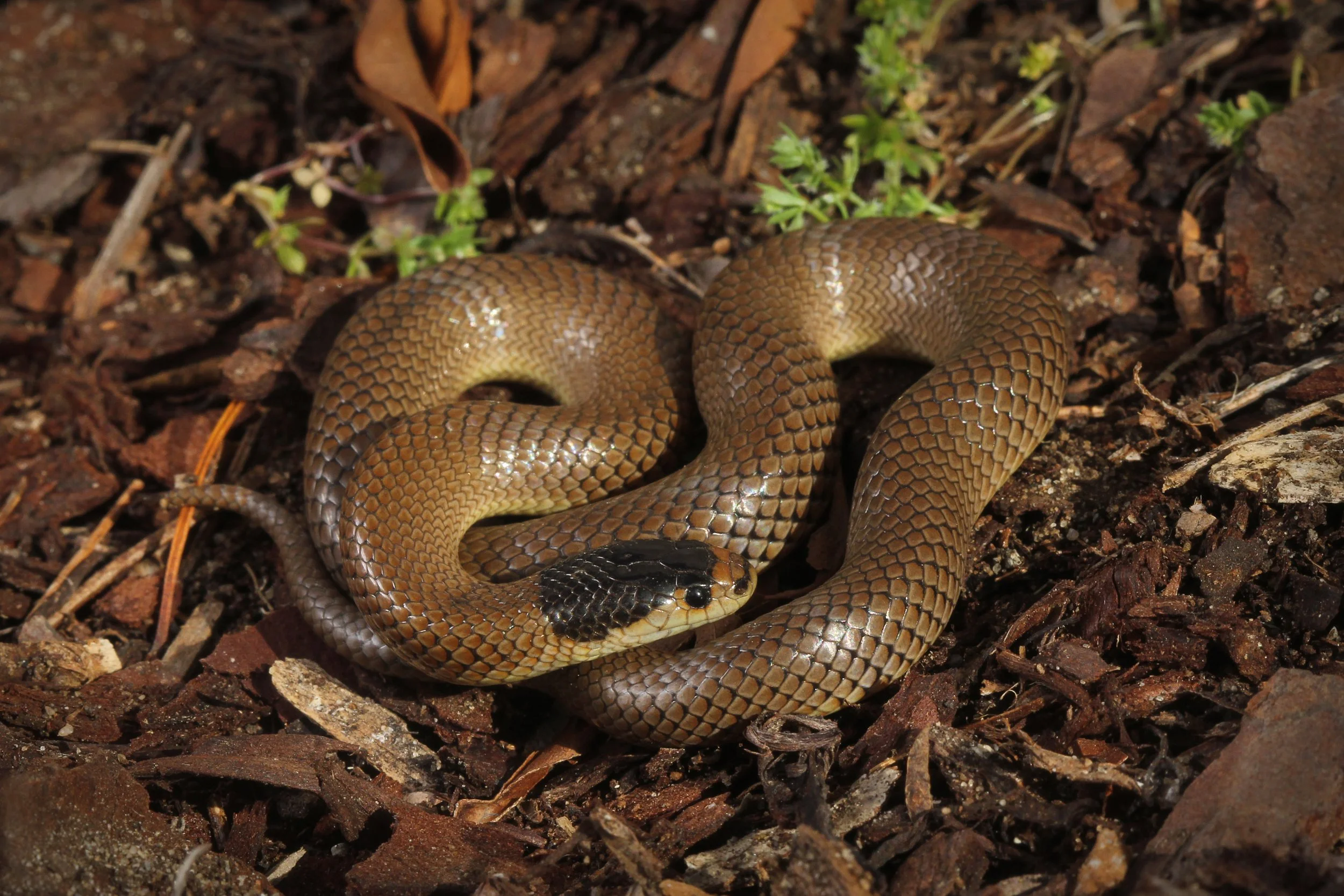
Photo credit: Connor Margetts.
Little Whip Snake (Suta flagellum)
These small nocturnal snakes grow to around 45cm and hunt small lizards. Although they are in the same family as the brown snakes, Little Whip Snakes are considered harmless to humans.
They are often mistaken for juvenile Eastern Brown Snakes and the two species can also share hiding spots together. The Little Whip Snake differs from the Juvenile Eastern Brown by having a broader, less conical-shaped head and lacking the neck band of the Juvenile Eastern Brown.
Pygmy Copperhead (Austrelaps labialis)
These shy venomous snakes are only found in the southern Mt Lofty Ranges and on neighboring Kangaroo Island. They can grow to between 50-100cm with some records reaching 1.2m. They are dark brown to black with cream-colored underparts and distinctive white vertical lines on the labial (lip) scales. They inhabit swamps, waterways, grasslands and woodlands, feeding on reptiles and frogs.
These snakes are listed as ‘Vulnerable‘ on the IUCN Red List. We are proud to provide habitat for these beautiful animals on our private piece of remnant bushland (AAHQ) in Mylor.
Photo credit: Connor Margetts.
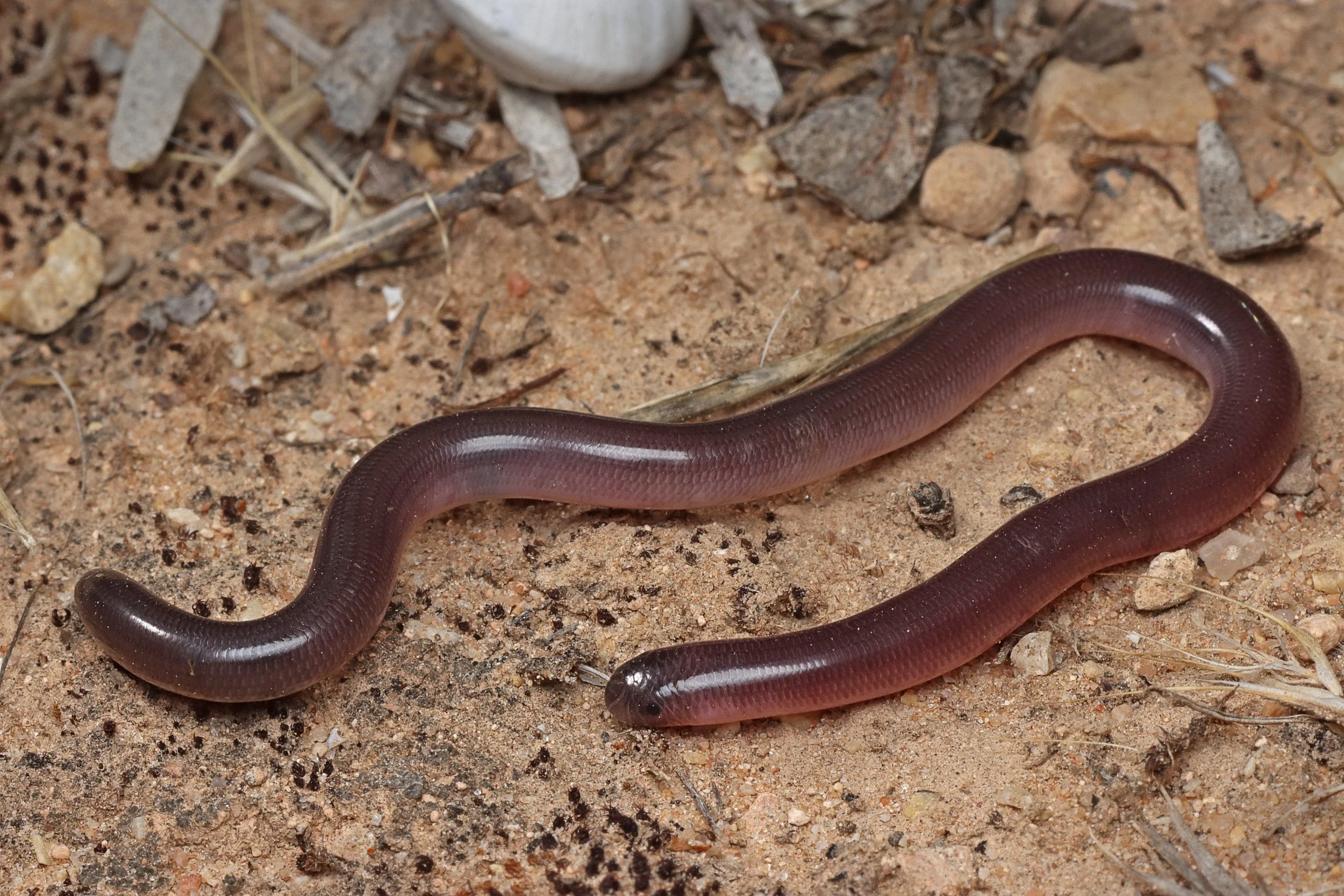
Blind Snakes (Family: Typhlopidae)
There are a couple of species of blind snakes in the northern and eastern parts of the southern Mt Lofty Ranges. These worm-like burrowing snakes are completely harmless but can release a foul odour from their anal glands if handled. They feed on ants and termites and do sometimes surface, typically on warm nights and after rain.
Pictured: Dark-spined Blind Snake (Anilios bicolor)
Photo credit: Connor Margetts.
Get in Touch
We’d love to hear from you!
Please fill out the contact form for a quote and we will endeavor to get back to you within 24 hrs.
We reply several times per day. If you haven’t received a reply, please check your junk/spam folder.
Thank you!